Legend holds that in 1494, an Italian friar named Luca Pacioli was sitting under an apple tree when an apple bounced off his head. In a flash of insight, he invented the “double-entry bookkeeping” system where each entry has a corresponding and opposite entry to a different account. Those entries, called debits and credits, help accountants avoid headaches, if the debits and credits don’t balance, there’s a mistake somewhere. (Some of you may be thinking that was Sir Isaac Newton with the apple inventing gravity, but this is our story and we’re sticking to it.)
Double-entry bookkeeping has ruled accounting for over 500 years. We see it everywhere today, including in our tax code. Revenue flows in, balanced by expenses flowing out. Anything left over eventually winds up in the “taxable income” account.
Sometimes, with taxes, that balance breaks down, and many of those disconnects spell opportunity. Real estate investors, for example, can depreciate the price of their properties over time. (We can help you with “cost segregation” strategies to do it even faster.) In the IRS’s ideal world, you’ll repay those breaks by “recapturing” them as income when you sell. But with tax-free exchanges, stepped-up basis, and other strategies to avoid that reckoning, most of those depreciation deductions never get recaptured at all.
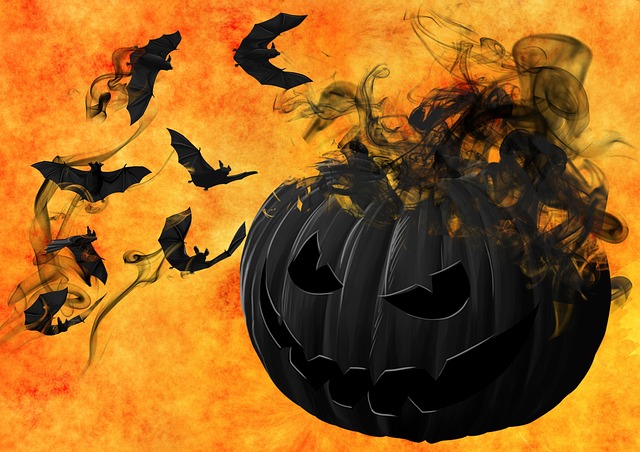
Now it’s Halloween: America’s second-favorite, and second-priciest, holiday. The National Retail Federation reports we dropped $9.1 billion on the spooky season last year, including $2.7 billion on candy. (Fun fact: Halloween candy is cheapest exactly four days before the 31st.) How does all that fit into Luca Pacioli’s neat little boxes? Well, it gets scary the minute the greedy little trick-or-treater on the other side of your door goes running down your sidewalk with their loot!
Here’s the disconnect. The candy company sells sweets to a retailer. That’s a taxable transaction. The retailer sells them to you. That’s another taxable transaction. But then you just give it to the little goblins, pirates, and princesses on your porch. No deduction for you, no income for them, no 1099s for the IRS. (Ugh. Can you imagine the 1099s?) That removes everything from the IRS’s world of debits and credits. Seriously, if the IRS taxed kids on their Halloween candy, they could collect millions of dollars to cover free dental care for everyone.
It’s all very ironic because, as any parent knows, Halloween is an exercise in managing the waste of assets. Your kids come home with bulging bags of candy and dreams of sugar highs lasting until Thanksgiving. But pretty soon the good stuff is gone. No more Kit-Kats or Snickers! They’re left with a couple of “fun-size” Milky Ways, some of those Jolly Ranchers nobody really likes, and a few stale candy corns. At that point, you “charge off the goodwill” by throwing out the dregs while they’re at school and hoping the kids don’t even notice.
Today, your average accountant or tax professional focuses their effort on making sure the debits match the credits. But we don’t just stop there. We take the time to look for those tax “disconnects” that can rescue thousands in taxes. There’s nothing scary about it at all. So email us when you’re ready to pay less. You’ll think the savings are pretty sweet!
Photo Credit: Alexas_Fotos [Creative Commons CC0], via Creative Commons
Donna Bordeaux, CPA with Calculated Moves
Creativity and CPAs don’t generally go together. Most people think of CPAs as nerdy accountants who can’t talk with people. Well, it’s time to break that stereotype. Lively, friendly, and knowledgeable can be a part of your relationship with your CPA as demonstrated by Donna and Chad Bordeaux. They have over 50 years of combined experience as entrepreneurial CPAs. They’ve owned businesses and helped business owners exceed their wildest dreams. They have been able to help businesses earn many times more profit than the average business in the same industry and are passionate about helping industries that help families build great memories.