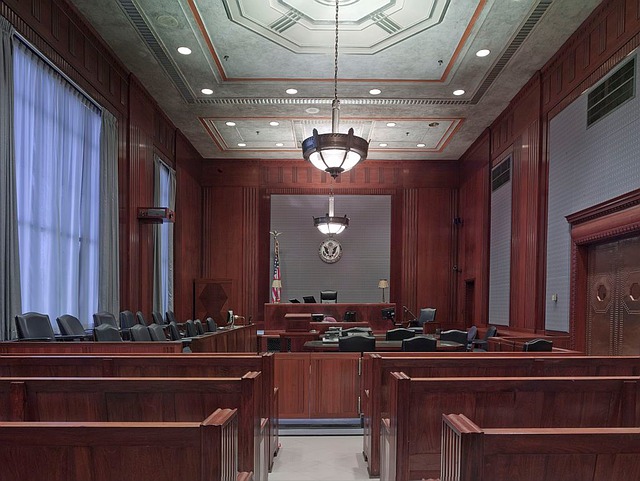
Some of the greatest stories in America reach their dramatic finale in a courtroom. Who doesn’t admire Gregory Peck as Atticus Finch standing up to racism in Jim Crow-era Alabama in To Kill A Mockingbird? Who can forget Tom Cruise baiting Jack Nicholson into bellowing out that yes, he did order the Code Red at the end of A Few Good Men? And who can’t imagine the smile of relief on O.J. Simpson’s face when the jury announced they had found him not guilty? (Good thing he’s finally out of jail so he can pick up his search for the real killers!)
Funny thing about those stirring courtroom dramas, though . . . they never involve tax cases. Don’t novelists see the conflict inherent in a “battle of the appraisers” debating golf course valuations in a conservation easement case? Can’t Hollywood producers tease out the complex dramas underlying a typical multinational transfer pricing dispute? What playwright wouldn’t dream of meditating on the cross-salient tankgrenuities raised by “Section 393 transfers” between counter-impactful entities after a Section 754 election? (Relax, we made that last one up. Those aren’t even real words.)
But tax questions do occasionally sneak into an actual court. So join us now for this week’s story, which begins on the banks of the Ohio River.
Back in 1850, Cincinnati was the sixth-largest city in America, nicknamed “Porkopolis” for the area’s meatpacking industry. (Can you imagine the smell?) Today, Cincinnati, along with rivertown rivals like Pittsburgh, St. Louis, and Kansas City, is navigating the transition to a 21st-century economy. But only Cincinnati is the home of professional baseball. And while today’s Cincinnati Reds may be a pale shadow of the 1970s “Big Red Machine,” fans still flock to the riverfront Great American Ballpark on game day, especially when the team gives away player bobblehead dolls.
That, in turn, brings us to the Titanic struggle that just reached its ninth inning in Ohio Supreme Court: do the Reds have to pay use tax on the value of those bobbleheads? The state tax commissioner argued the team had bought them to give away to fans, in which case the team owed the tax. The Reds responded that they had bought them to resell as part of the overall ticket, in which case they would qualify for the “sale-for-resale” exemption under ORC §5739.01(E). The Board of Tax Appeals called the Reds “out,” and demanded $80,000 in back tax.
Naturally, the team challenged the ruling on the field. That’s when the replay reviewers at the Court stepped in. Last month, they issued their call. By a 5-2 count, the Justices yanked the commissioner from the mound. Instead, as Chief Justice Fisher wrote, “the unique promotional items were an explicit part of the bargain, along with the right to attend the game, that the fans obtained in exchange for paying the ticket fee.” That promise qualified the play as a resale. In the words of longtime radio announcer Marty Brennaman, “This one belongs to the Reds!”
We’ve said before that every financial choice you make has some tax consequence. This week’s story proves that can be true even when you’re not making a choice! And while nobody is getting rich by eliminating bobblehead taxes from their life, the lesson remains that proactive planning is the key to paying less. So enjoy the rest of 2018 and have a Happy New Year. And count on us to help you make the most of all your planning opportunities in 2019 and beyond!
Photo Credit: ID 12019 [Creative Commons CC0], via Creative Commons
Donna Bordeaux, CPA with Calculated Moves
Creativity and CPAs don’t generally go together. Most people think of CPAs as nerdy accountants who can’t talk with people. Well, it’s time to break that stereotype. Lively, friendly and knowledgeable can be a part of your relationship with your CPA as demonstrated by Donna and Chad Bordeaux. They have over 50 years of combined experience as entrepreneurial CPAs. They’ve owned businesses and helped business owners exceed their wildest dreams. They have been able to help businesses earn many times more profit than the average business in the same industry and are passionate about helping industries that help families build great memories.