Owner's Draw vs. Payroll: How to Pay Yourself as a Small Business Owner the Smart Way
July 1, 2026 · 6 min read
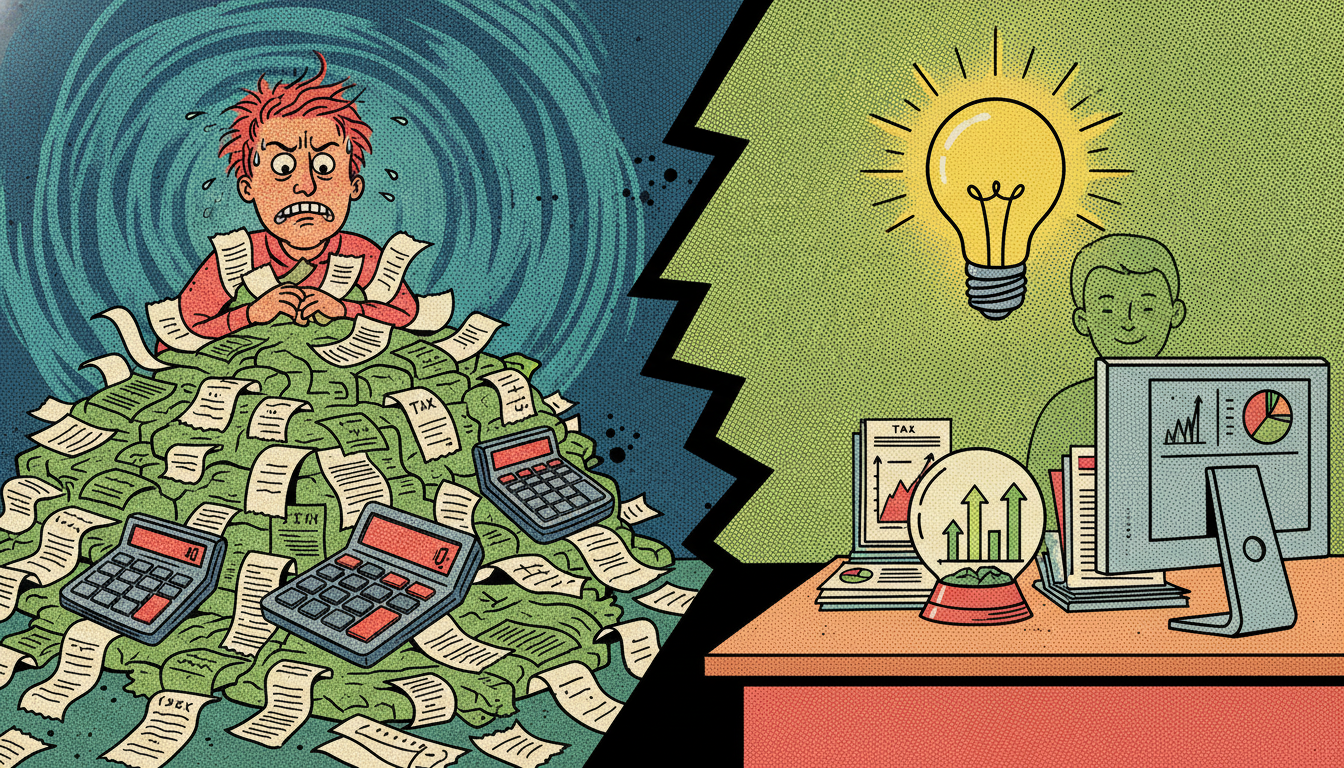
Here's a question that trips up more small business owners than you'd expect: How should you actually pay yourself? You're grinding, closing deals, managing properties, building something real but when it comes time to take money out of the business, too many entrepreneurs wing it. They pull cash whenever they need it, ignore the tax implications, and then get blindsided by a massive tax bill in April.
Whether you're running a real estate investing business, a property management company, or any other small business, the way you compensate yourself has a direct impact on how much you keep. Let's break down the difference between an owner's draw and payroll, when an S corp election can save you serious money, and how to structure your pay to build wealth, not donate it to the IRS.
Owner's Draw vs. Payroll: What's the Difference?
At the most basic level, there are two primary ways to pay yourself from your business: an owner's draw and payroll (W-2 salary). The right choice depends on your business structure, your income level, and your tax strategy.
Owner's Draw
An owner's draw is simply taking money out of your business for personal use. There's no paycheck, no withholding, no pay stub. You transfer funds from the business account to your personal account, and that's it. This is the default method for:
- Sole proprietorships
- Single-member LLCs (taxed as disregarded entities)
- Partnerships and multi-member LLCs
The draw itself isn't taxed at the time you take it. Instead, you pay self-employment tax (15.3% for Social Security and Medicare) plus income tax on your business's net profit, regardless of whether you actually withdrew the money or left it in the account. That's a critical distinction. The IRS taxes you on profit, not on what you take out.
Payroll (W-2 Salary)
When you run payroll for yourself, you become an employee of your own company. Taxes are withheld from each paycheck, federal income tax, state income tax, Social Security, and Medicare. Your business also pays the employer portion of payroll taxes. This method is required for S corporations and C corporations, and it comes with more administrative overhead (think payroll software, quarterly filings, and W-2s at year-end).
The S Corp Strategy: How to Reduce Self-Employment Taxes
This is where things get interesting for real estate investors and small business owners who are generating solid income. If your business is structured as an LLC, you can elect to be taxed as an S corporation. This single decision can save you thousands of dollars per year.
Here's why: With a standard LLC or sole proprietorship, your entire net profit is subject to that 15.3% self-employment tax. So if your business nets $150,000, you're paying roughly $23,000 in self-employment taxes alone, before income tax even enters the picture.
With an S corp election, you split your income into two buckets:
- Reasonable salary, subject to payroll taxes
- Distributions (remaining profit), NOT subject to self-employment tax
So if that same $150,000 business pays you a reasonable salary of $60,000 and distributes the remaining $90,000 as profit, you only pay payroll taxes on the $60,000. That's a potential savings of nearly $14,000 in self-employment taxes. The distributions still get taxed as income, but you dodge that extra 15.3% hit on a significant chunk of your earnings.
What Counts as a "Reasonable Salary"?
The IRS isn't going to let you pay yourself a $20,000 salary on a $200,000 profit and call it a day. They require S corp owner-employees to take a reasonable salary, meaning compensation that's comparable to what someone in a similar role, with similar experience, would earn in your market.
Factors the IRS considers include:
- Your training, experience, and responsibilities
- Time and effort you devote to the business
- What comparable businesses pay for similar services
- The size and complexity of your business
- Your company's revenue and profit history
Setting your salary too low is a red flag that can trigger an audit. Setting it too high defeats the purpose of the S corp election. The sweet spot is somewhere in the middle, defensible, documented, and strategic. Many business owners work with a CPA or tax advisor to nail down the right number.
When Should You Consider Payroll and an S Corp Election?
An S corp election isn't right for everyone. If your business is brand new or you're only netting $30,000–$40,000 a year, the added costs of payroll processing, tax filings, and compliance may eat up any tax savings. Generally, the S corp strategy starts making financial sense when your business is consistently profiting $50,000 to $60,000 or more per year.
Here are some signs it might be time to make the switch:
- Your net business income consistently exceeds $50K–$60K annually
- You're tired of paying massive self-employment tax bills
- You want a more structured, predictable compensation system
- You're scaling your real estate portfolio or business operations
- Your tax advisor confirms the savings outweigh the costs
Keep in mind that S corps come with additional requirements: you'll need to run proper payroll, file quarterly payroll tax returns, and submit annual S corp tax returns (Form 1120-S). It's more work, but for the right business at the right income level, the tax savings are well worth the effort.
How to Avoid Surprise Tax Bills and IRS Trouble
Whether you're taking draws or running payroll, staying ahead of your tax obligations is non-negotiable. Here are practical steps to keep yourself out of trouble:
- Make quarterly estimated tax payments. If you're taking owner's draws, the IRS expects you to pay taxes throughout the year, not just in April. Missing these payments can trigger underpayment penalties.
- Separate business and personal finances. Keep a dedicated business bank account. Mixing funds is sloppy, makes accounting a nightmare, and can jeopardize your LLC's liability protection.
- Track every draw and distribution. Document when you take money out, how much, and categorize it properly. Your bookkeeper and CPA will thank you.
- Don't skip payroll if you're an S corp. This is one of the fastest ways to get flagged by the IRS. If you've elected S corp status, you must pay yourself a reasonable salary through payroll. No exceptions.
- Work with a tax professional. The tax code is complex, and the rules change. A good CPA who understands small business and real estate investing can save you multiples of what they charge.
Build a Smarter Compensation Strategy
Paying yourself isn't just about covering your bills. It's a strategic decision that affects your tax burden, your cash flow, and your long-term wealth-building trajectory. The difference between an owner who wings it and an owner who plans their compensation intentionally can be tens of thousands of dollars over time. That's money that could be funding your next investment property, building your reserves, or compounding in a brokerage account.
Here's the bottom line: understand your business structure, know your options, and make calculated decisions about how you get paid. An owner's draw works great for early-stage businesses and simpler structures. Payroll through an S corp can be a powerful tool once your income justifies it. Either way, stay organized, pay your taxes on time, and lean on professionals who can help you optimize.
Want to dive deeper into tax strategies, deal analysis, and building wealth through real estate? Head over to the Calculated Moves blog for more actionable insights, and subscribe to the YouTube channel so you never miss a breakdown that could save you real money.